My soul showed up at low tide

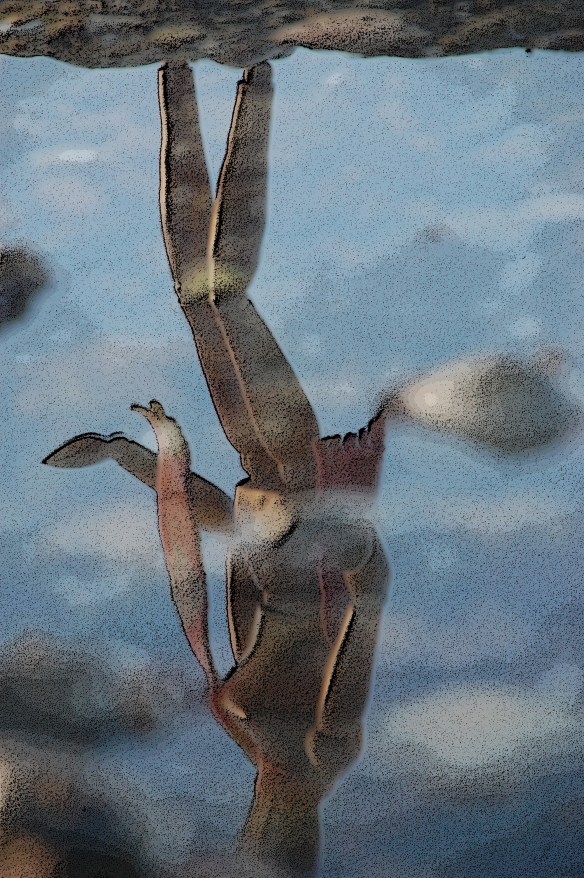
My soul showed up at low tidePerhaps it’s only when you feel deserted by the ocean,
as if the water receded along with your hopes,
and even the moon seems gone…

Reflections of a soul

that your soul shows up with a story,
as upside down as it seems.
Find brimful meaning and truth
while the tidepool steeps her saltwater tears.

Her head in the clouds of low tideSoul wonders
which view you might choose.
“Girl, put your head in the clouds.”

The Next Big Thing – playing in a blog chain by SheWrites

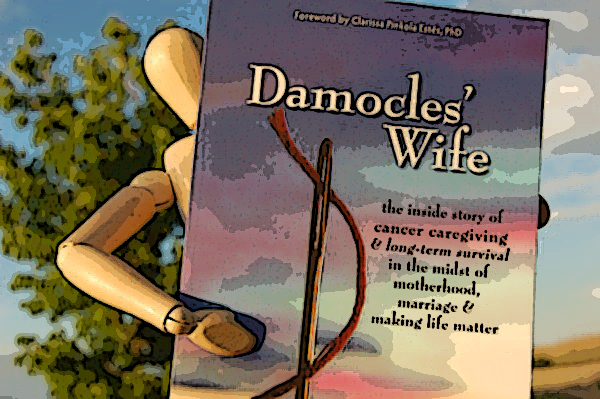
We interrupt our regularly posted Emotikin photo-stories to add our story to “The Next Big Thing” a blog chain winding its way through the internet from SheWrites.com.  I’m happy to participate by answering 10 questions about my new book, Damocles’ Wife. Many thanks to Deborah Strobin for inviting me to join.

damocles-emotikin-posterized

1.  What is your working title of your book (or story)?

Under the Sword of DamoclesThe book is titled Damocles’ Wife: The Inside Story of Cancer Caregiving & Long-Term Survival in the Midst of Motherhood, Marriage & Making Life Matter. You wouldn’t believe how many working titles I had and how many years it took to find the right one!  I had settled on the subtitle before the title came to me.

Only Scott and I knew, as we feasted, that a sharp samurai sword hung in the air over our table, over Scott’s head, his Sword of Damocles. From where I sat, I could see it quite plainly. Is that the caregiver’s curse—to notice that sword on a thread more often, more clearly, than the patient himself? It was time to step out from under that sword.

2. Where did the idea come from for the book?

I had a feeling as soon as my husband was diagnosed with his brain tumor that I would want to write a book someday to capture what was going on inside my head and heart and maybe help others on the same path. I also credit Laura Ingalls Wilder, because I read the Little House on the Prairie series too many times as a kid, assuming everyone kept journals to someday write books based on their own life.

Scott sat on the exam table and I sat in the chair, facing the door. Such a small room, I was thinking, seeming narrow enough for my hands to push out on both walls, left to right, as if reality was already squeezing in. We didn’t talk. I kept clicking my ballpoint pen, poised over my brand new five-subject spiral notebook, and I turned to the third blank page, as if leaving room for a title and preface. It’s a habit I have with all my new notebooks

3. What genre does your book fall under?

Cancer caregiver memoir. I’d file it under “Health & Healing” with non-fiction cancer or caregiving or self help books.

4.  Which actors would you choose to play your characters in a movie rendition?

Well, John Travolta and Kyra Sedgwick were already us in Phenomenon in 1996 – before our own story even started in 1998. For Damocles’ Wife on the big screen, I used to imagine Helen Hunt for me and for Scott, Mark Ruffalo (ironically, he actually had his own benign brain tumor in 2002). Since most of the book is when we’re only 33 years old, I’ll have to think of younger actors now!

It was two years after Phenomenon when Scott’s brain tumor arrived. Watching our videotape of the movie one night, we gasped at the moment when the character was diagnosed with an astrocytoma.

“God, maybe that’s why I couldn’t stop crying when we first saw the movie. Remember? What if part of me knew this was coming.”

5.  What is the one-sentence synopsis of your book?

These one-sentence rules are just SO hard! I’m trying to become a rule-breaker, so here’s my two:

Damocles’ Wife reveals the inner journey of a cancer caregiver, a young wife and mother whose husband becomes a long-term survivor of brain cancer. It’s the whole family’s story of summoning courage, hope and faith while learning to cope not only with the practical aspects of cancer and caregiving but, most essentially, how to really survive—in your soul.

6.  Will your book be self-published or represented by an agency?

It is self-published under Two Louise Press … “because I could.” I learned the ropes in my former publishing job and I love the whole process of book editing and design, too.

7.   How long did it take you to write the first draft of your manuscript?

I lived my first draft by writing in my journals and wrote emails to document our cancer treatment phase, so that was about one year. Then a few years later I spent one focused hard-working summer to write actual chapters. That was wrapped between a few incredibly supportive semesters in a writing group under Women Writing for (a) Change. Some parts were really hard to remember and to put into words.

All summer of 2004, I had been struggling to write our stem cell chapter, still trapped in my fear on the church lawn that long-ago Sunday morning. But now I thought I could write of it, starting with the meaning of the oriole moment.

The bird story poured out on paper, but when I tried again to recreate the day in 1999, I was still stumped, unable to release my memory clamped shut by fear. So I revisited my 7/11/99 journal entry, looking for clues to my courage back then.

8.   What other books would you compare this story to within your genre?

books-mini-posterized600p

As far as I can tell, and I’ve looked long and hard, this is the first cancer caregiving memoir to cover long-term survival. Most books for caregivers are non-fiction “how to” books and memoirs are written after a patient dies. Cancer survival, for us at least, was surprisingly harder than the treatment — facing permanent disability and how life changes so much.  There are cancer survival books written by the patient. Embrace, Release, Heal by three-time cancer survivor Leigh Fortson (who is my friend) is a memoir that addresses the physical, emotional and spiritual aspects, and alternative medicine — it’s from the patient’s perspective not the caregiver’s. Mine is a hybrid memoir that shows the practical tools in action for facing cancer and also delves into the inner life of the caregiver. There are classic books that just help address the spiritual aspect of deep change that inspired me to keep going.

9.  Who or what inspired you to write this book?
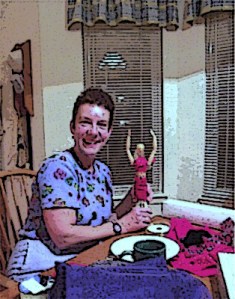
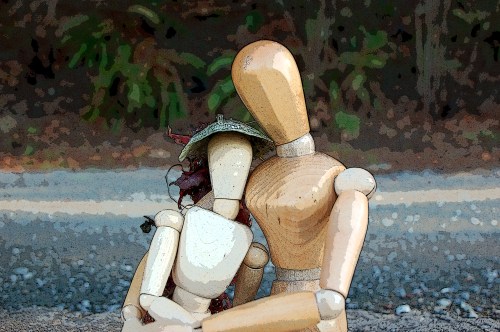
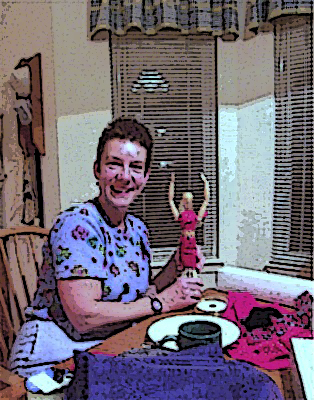
Julie with her Emotikin in 2003I had so much inspiration. The samurai-like bravery of my husband Scott for the way he faced his cancer, and my good friend Julie (pictured here), who had breast cancer at the same time (she was our trailblazer, with her diagnosis one month sooner than Scott’s).  And as the years unfolded, we became friends with so many other young couples facing brain tumors. Having met them made us feel more hopeful and connected, and I wanted to pay it forward by sharing our story in depth. Finally, our neuro-oncologist is one of the very few in the country who is beating the odds for brain cancer survival, so this is also a tribute to him and his team. Also see #10 below!

As we cleaned up the dishes and put plastic wrap on the leftover pies, Scott and I talked about how impressed we were by the McDowell’s calm grace and their willingness to interrupt their own treacherous, hectic journey to spend an hour with us. They didn’t come to solve our problems, but to share a slice of pie and their compassion.

“I hope we can do the same thing for other patients some day,” I said.

“Me, too,” he agreed.

You can meet someone with another type of cancer and feel some sense of connection. But until you meet someone with the same diagnosis, in the same boat, the same situation, you can’t help but feel alone, as if nobody has walked in your shoes.

10. What else about your book might pique the reader’s interest?

My son was only four-years old at the time his dad was diagnosed, and so much of the book is about being a mom and all the considerations like child care, separation anxiety, talks about death, anger. On top of that, my mom is a long-term survivor of ovarian cancer, but her survival was a mystery to me and the book reflects on that.

And then there’s the Healing Touch, a complementary energy medicine treatment, that I think was as essential to  our family’s health/soul-survival as it was to coping with Scott’s brain surgeries, chemo, radiation and stem-cell rescue.

Caregiver burnout is a real thing and a health crisis that people are just starting to talk about – this book is my small way of trying to raise awareness by offering our story like a case study. In April 2012, TEDMED named “The Caregiving Crisis” the #2 most important health and medical issue of the year. My book is part of a caregiver support website that began long before the book called www.CaregiverHope.com.

Finally, as a clue to what I allude to in chapter 47, Learning to Play, this Emotikin website represents the creative project that saved me from caregiver burnout before I could even begin writing my book.

Creativity was my lifeboat. It not only kept me afloat, but it gave me the buoyancy to lift my arms and my face to the surface, frog kicking, breast stroking my way to the shore. Creativity was swinging from a rope like Tarzan’s transformed Jane, letting go, falling, feet first in a pond, squealing and yelling just to be loud, not caring how stupid you look soaking wet in a swimsuit. Skinny dip, if you dare. 

bella-wil-atriver-posterizedBella Luna’s photographic debut on the banks of the Colorado River, April 2003.

P.S. I have some emails out to other writers but don’t have names to list yet for the blog chain.
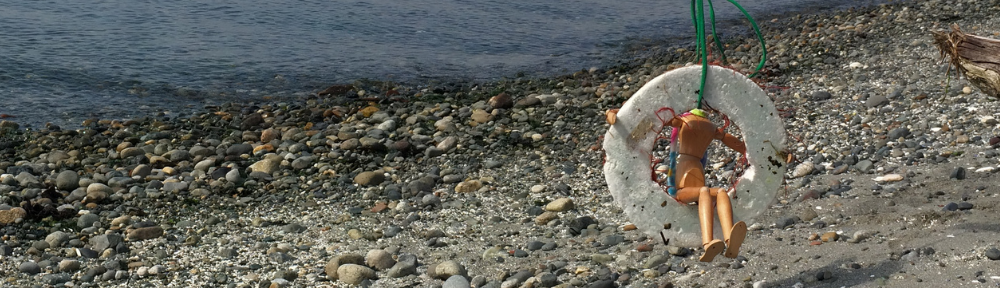
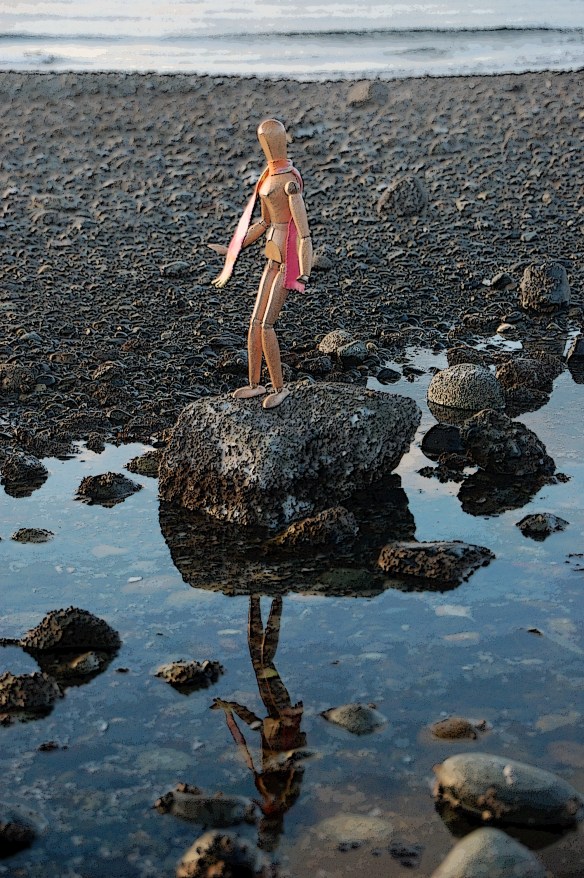
Hoisting our own sunshine on a non-sun Sunday in Seattle

hoisting-sun-hz

Some days in Seattle, especially Sundays,
it’s necessary to make your own.
Sun, that is.

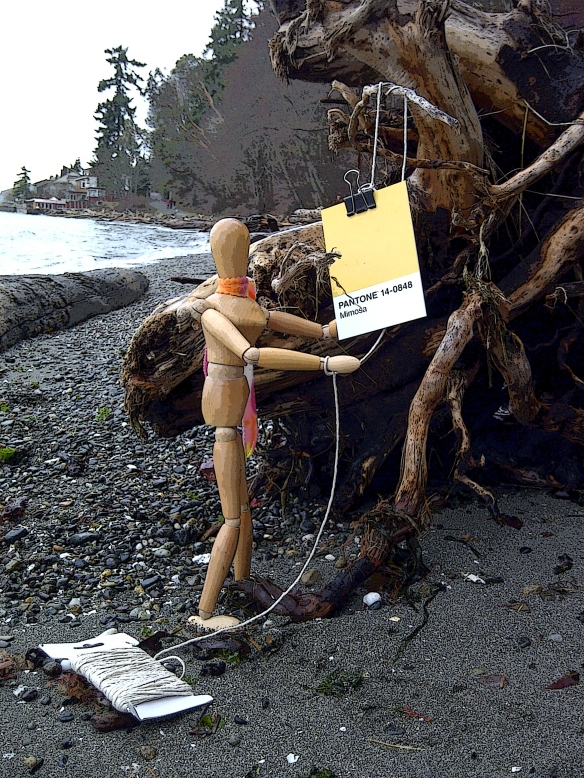
hoisting-sun-mimosa-pms14-0848

We have these Pantone color-matching cards that make the perfect,
and we mean perfect, sunshine colors.
Mimosa makes sense for PMS 14-0848,
like Sunday brunch at the beach.

hoisting-mimosa-pantone14-0848
The mechanics are a bit like flying a kite,
string required, of course.
A bit of wind helps, but not too much.

hoisting-sun-mimosaYou wait for just the right breeze, the right lift,
and you hoist your sunshine into the sky.
And bask in the glow.
Good for the soul.
SPF 2 is plenty.

In awe of the textures of New Years Day in the forest

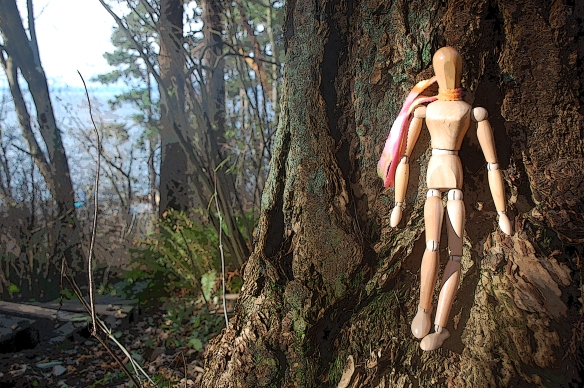
simply random snapshots of New Years Day in the woods of Lincoln Park…
tree-communing-NewYearsDay2013communing with trees

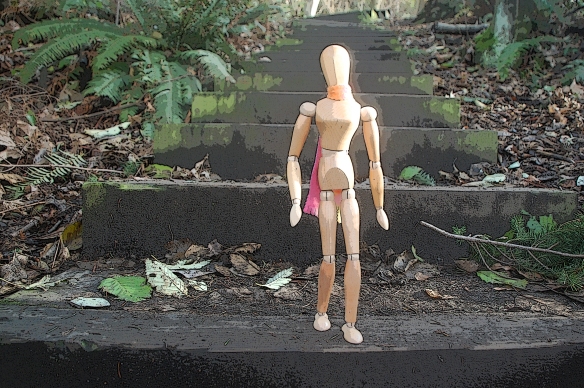
stairs-to-newyears

composting autumn on the 138th step

stairs-closeup

in-awe-of-algae-texturesawed by so many layers of life in these woods

awesome-olympicsa posterized view over Puget Sound

Building a Sand Snowman in West Seattle

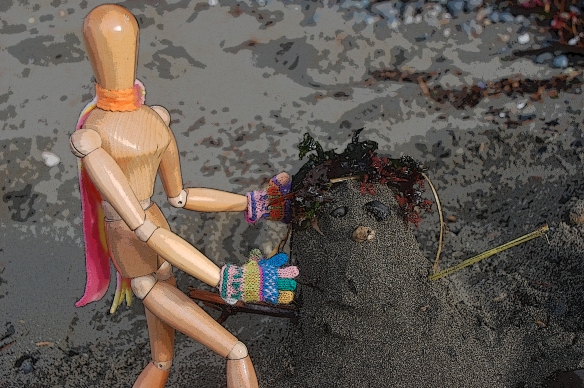
mittens-sandman-posterizedIf it doesn’t snow at the beach, can you still meet a snowman?
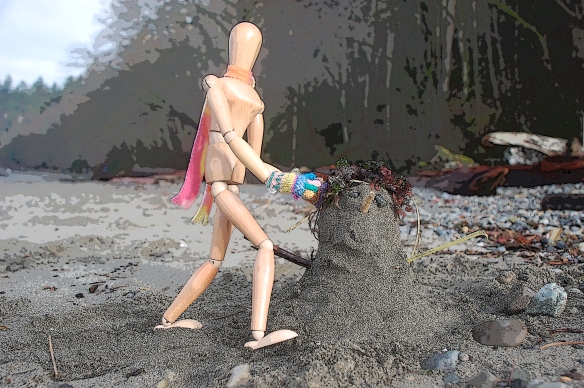
building-a-sandmanIf you find the right ingredients, like low tide, a crab leg for a nose,
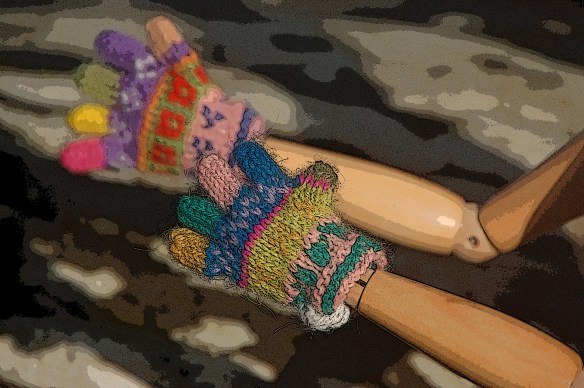
seaweed hair, driftwood and sea-grass arm,s and pebble eyes…

mittens-posterizedAnd magic mittens that make sand into snow, sort of…
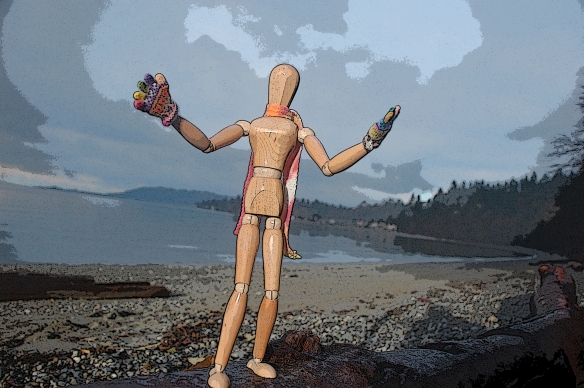
mittens-sea-posterized

And the final magic?
Sunday sunshine .

Encounter at the Islandwood Suspension Bridge

Chapter One. Crossing to the Other Side.

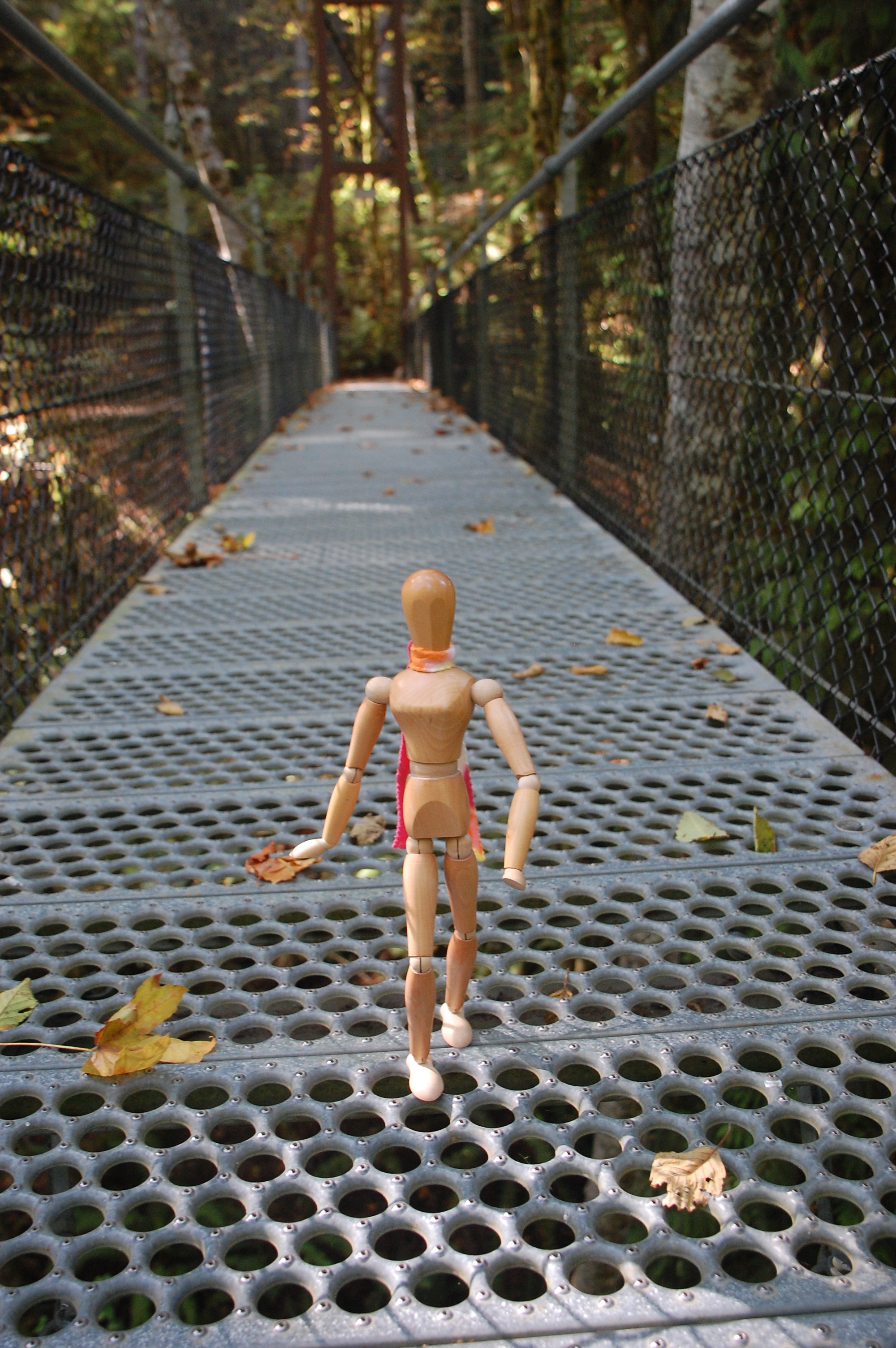
Taking my first steps onto the suspension bridge at islandwood

Step one. Step onto the bridge. Don’t look down.

Move toward the light.Step two. Move toward the light. Don’t look down.

Half way there.Step three. Half way. Look up.

keep goingStep four. Dancing now. Step ball change.

Chapter Two. The Other Side.

Like a signpost.

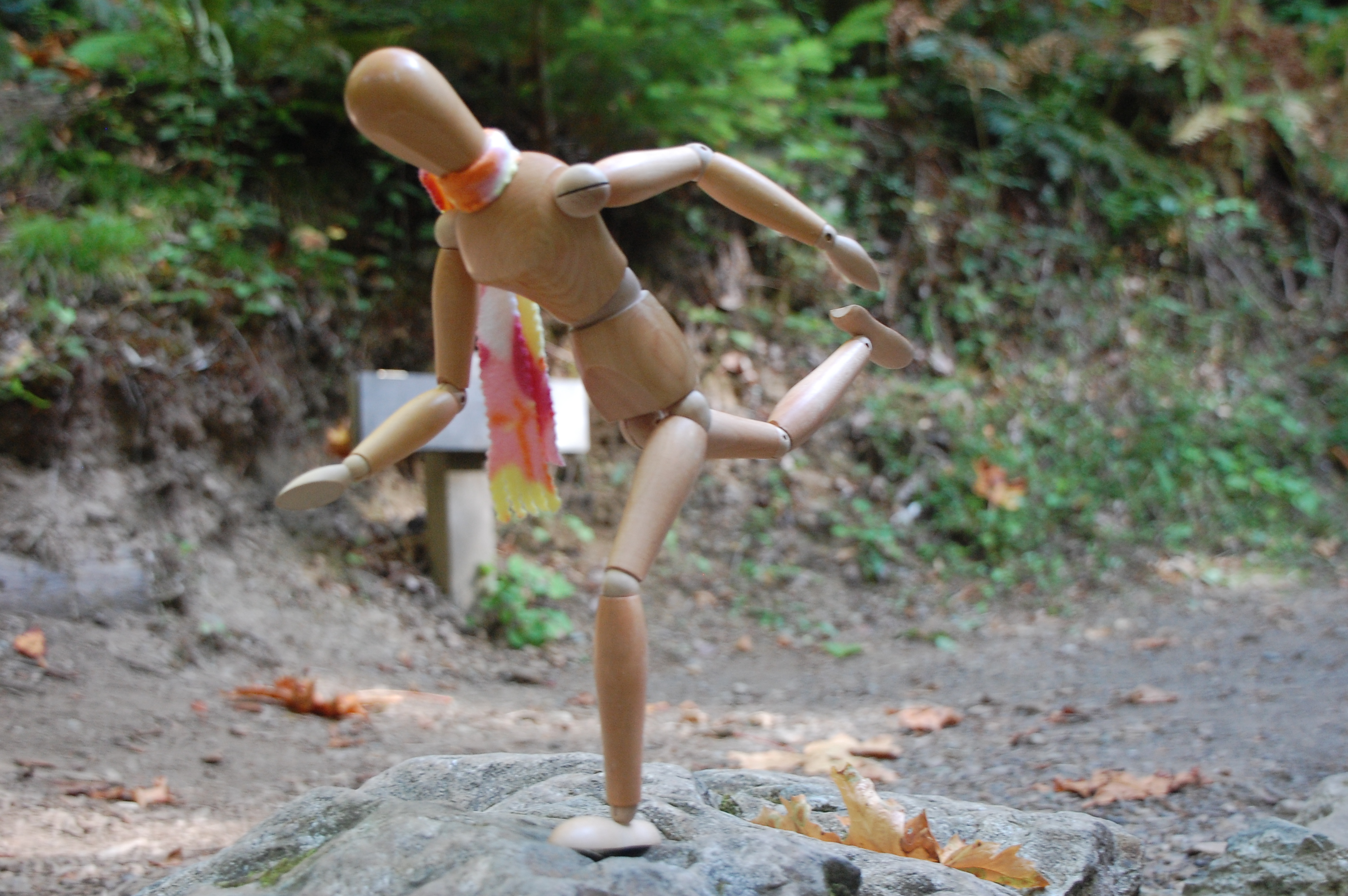
The signpost isn’t the only one who can stand on one leg.

Left leg leaping.Left leg leap (a wise woman once said “left is the spiritual side”).

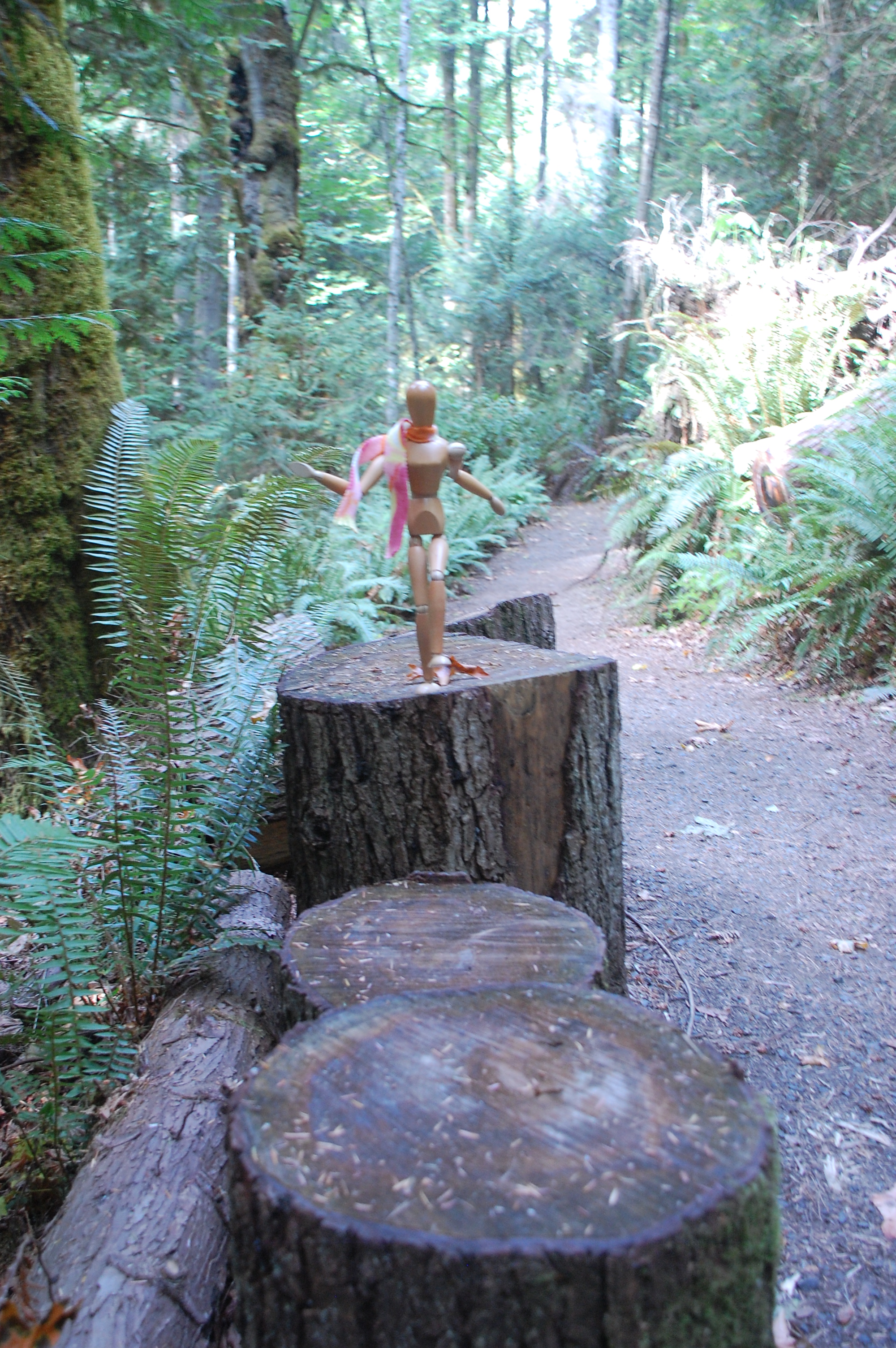
Stump jumping.Stump jumping.

Light drips off my feet.Light drips from my feet.

Light drops.Magical forest… light really is dripping from my feet.

Chapter 3. Leaf Goddess Appears

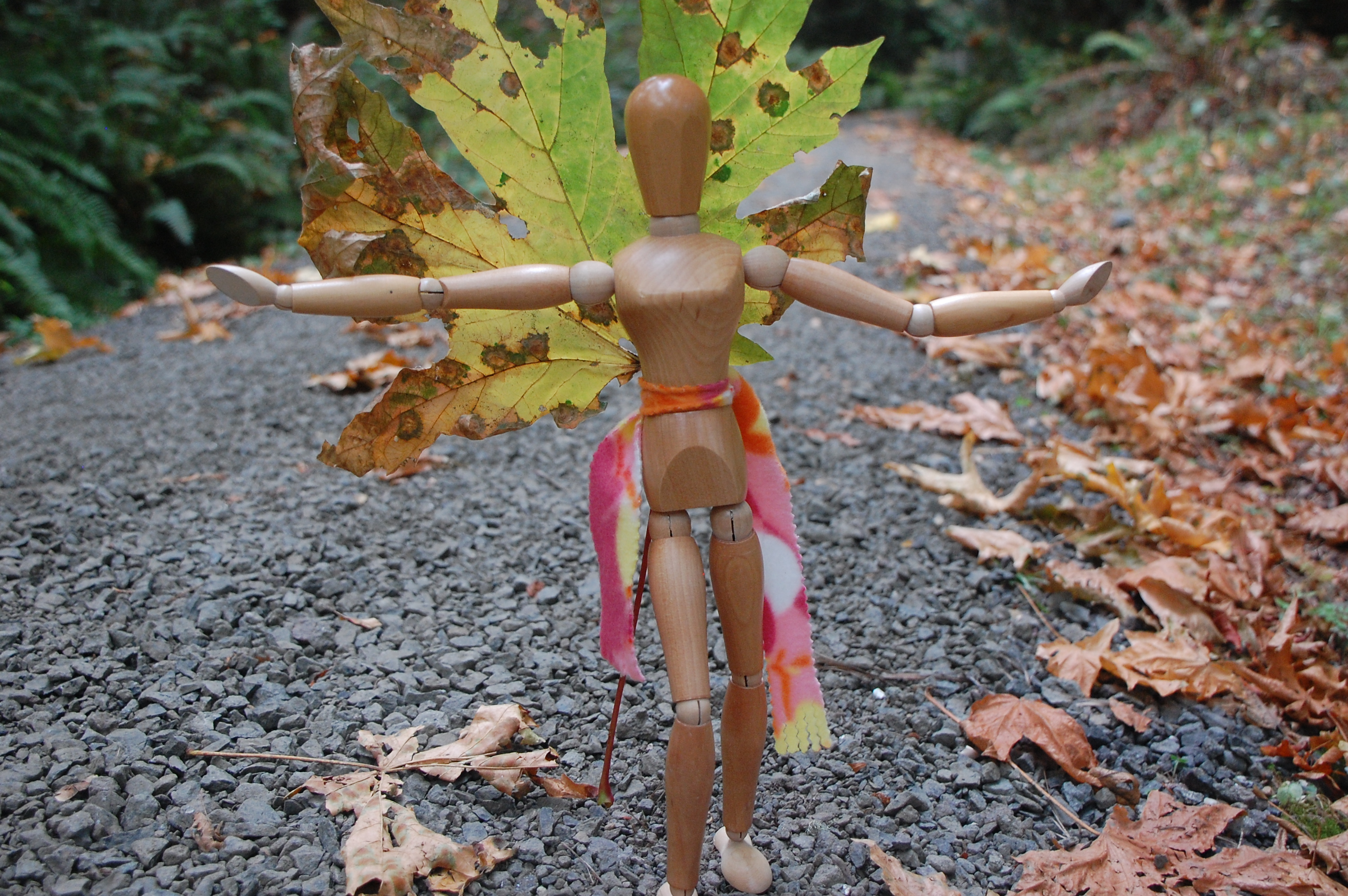
I sprout leaf wings

Ta da! I sprout leaf wings.

I am a leaf peacock.I am a leaf peacock.

Thank you, AutumnSummer ends.

Thank you, Autumn.

Brought to you by Sahale, LLC suspension bridges company.This blog brought to you by the lure of the Sahale bridge at Islandwood.

Emotikin sits under the Sword of Damocles to see how cancer survivors feel…

Does Emotikin’s wife have an ever better view of that damn sword?

Under the Sword of Damocles

Get out from under that Damocles Sword

Read Damocles’ Wife to see how one family learned how to get out
from under that sword and finally embrace life with all of its changes.

Read Damocles' Wife

Damocles’ Wife: The Inside Story of Cancer Caregiving & Long-Term Survival in the Midst of Motherhood, Marriage & Making Life Matter
by Shelly L. Francis  

If you’ve ever wondered how you might find the courage, hope, and faith to face the challenges of cancer and caregiving, you’re not alone. Damocles’ Wife reveals the inner journey of a cancer caregiver, a young wife and mother whose husband becomes a long-term survivor of brain cancer.

Follow their story, inside and out, through nine months of treatment: brain surgery, radiation, tumor doubles, second opinions, second surgery–this time awake–with photodynamic therapy, chemo, chemo, chemo, then high-dose chemotherapy with stem-cell rescue. Recovery…

Given a prognosis of two to five years, maybe ten, for his astrocytoma, Scott invoked his inner samurai to face aggressive traditional treatment, combined with integrative medicine like Healing Touch. Meanwhile, Shelly called on her inner resources, plus the rest of Scott’s caregiving crew, so that she could take care of him, herself, and their preschooler son, Wil, and still be standing no matter what.

This is the whole family’s story of learning to cope not only with the practical aspects of cancer and caregiving but, most essentially, how to really survive—in your soul. Join their journey as they learn to take down the Sword of Damocles hanging over Scott’s head and finally embrace life with all of its changes.

The first caregiver memoir to address long-term cancer survival, Damocles’ Wife will resonate with families facing cancer of all kinds, families dealing with chronic illness, disability, and dementia, as well as families of returning soldiers now facing life with traumatic brain injury.

What is the Sword of Damocles ( DAM-uh-kleez) ?

Read more about Damocles at WikipediaIn Damocles’ Stories, the foreword written by Clarissa Pinkola Estés, PhD (author of Women Who Run with the Wolves), readers will gain insight into the cultural legend of the Sword of Damocles (pronounced DAM-uh-kleez) from Greek history and her own “peasant” family’s stories passed down through generations. The anecdote originates from the 4th century court of Dionysius II, as told by Cicero. A courtier, Damocles, so admired and pandered to the king that Dionysius invited Damocles to sit on his throne at a feast. But he arranged for a sharp sword to hang over Damocles’ head by the single hair of a horse’s tail, proving to Damocles the sense of constant fear under which “the great man lives.” (Illustration from the Damocles entry in WikipediaRichard Westall’s Sword of Damocles, 1812.)

In 1981, researchers named Gerald P. Koocher, PhD, and John D. O’Malley, MD, authored a book called TheDamocles’ Syndrome in which they described the long-term, persistent fear that survivors of childhood cancer feel, ever wondering when their cancer might return and kill them.

In Damocles’ Wife, Shelly Francis offers her own viewpoint of how cancer caregivers are perhaps even more aware of that Sword of Damocles’ hanging over the head of their loved one and what the threat of cancer recurrence means for their own unknown future. Here is an excerpt from Damocles’ Wife:

“Only Scott and I knew, as we feasted, that a sharp samurai sword hung in the air over our table, over Scott’s head, his Sword of Damocles. From where I sat, I could see it quite plainly. Is that the caregiver’s curse—to notice that sword on a thread more often, more clearly, than the patient himself? It was time to step out from under that sword.”

Download Chapter One (PDF)

Find us on Facebook Tweet with us

Brought to you by the letter Hh #ced2010

Writing the letter Hh in Vimala Rodgers' font

Transforming with the letter Hh

Taking the 40-Day Challenge

Taking the 40-Day Challenge

My friend Crystal did an Emotikin photoshoot this week with my favorite interactive kit from author Vimala Rodgers called Transform Your Life Through Handwriting: How the Pen Can Unlock Your Soul’s Potential (Sounds True, 2009). I am lucky enough to be the kit’s publicist for my day job and as part of the process, I spent months playing with the alphabet according to Vimala (and countless nights dreaming about it as my brain was processing the new neuroplasticity of changing the way I wrote my letters).   

As a kid I used to practice my handwriting for hours,  using my left and my right hand, immitating my mom’s handwriting, pretending to be a teacher, making up my own fonts, practicing my new lastname (my new “autograph” as Vimala calls it) before I got married. This kit completely resonates with me.   

I took her 40-Day Challenge to write at least a page a day full of a letter plus journaling on how the letter’s energy could effect changes in my life. Last night I reread my journal and it’s fascinating to see what changed in a year and how my penmanship (she doesn’t call it that though) has stabilized into a somewhat new style (at least for many letters).   

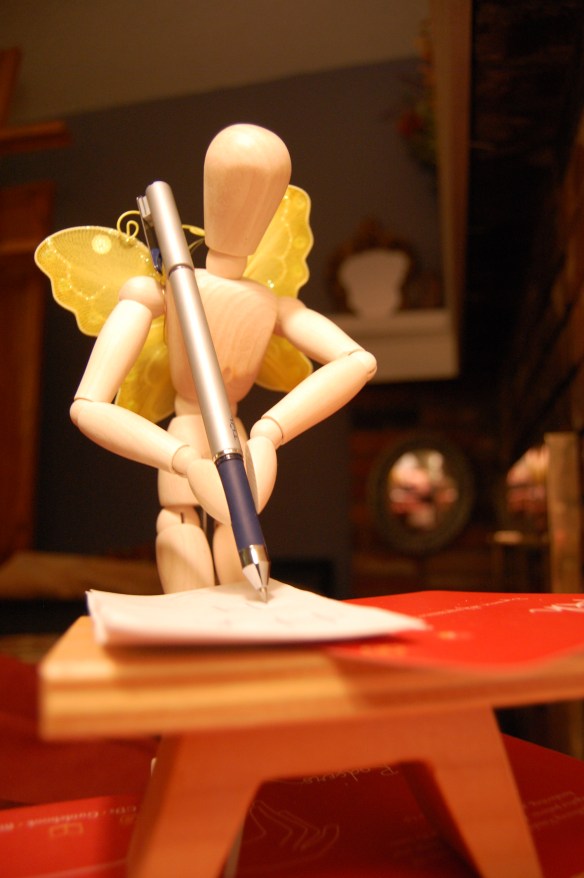
The letter Hh was one of my favorites to work on, partly because the associated animal is the butterfly. (Crystal didn’t know that when she did the photoshoot with her Emotikin wearing butterfly wings.) I love the daily “Declaration of Intent” for the letter Hh:   

I, Shelly, live my life path with the zeal of an evangelist and the wide-eyed innocence of a child.

Vimala graciously allowed me to paste an excerpt from her guidebook here. You can also visit www.alphabeticalblessings.com to learn more and follow her on Twitter @vimalarodgers.   

Excerpted with permission. © 2009 Vimala RodgersThe Letter Hh

Soul Quality: Dynamic self-expression. The Letter Hh emits one of the most powerfully propelling energies in the entire alphabet. Just look at it. It introduces itself with two “I am” strokes. It doesn’t get much better than that! If you practice it daily and draw into your life as many of its aspects as you possibly can, get ready for the adventure of your life. We often backpedal rather than share the vision of how we want to shape our dreams in the world. Why? We’re convinced that someone will douse our dreams with negativity. The Letter Hh won’t allow it. It not only moves you forward, it invites you to learn necessary lessons from the blind alleys you encounter along the way and guides you through them with dynamic, not-forsissies energy. If you want to put firm footing on your intended life path, this is the letter to adopt. As a sidebar, I have practiced the Letter Hh daily for more than 30 years; not surprisingly, I experience its “Just go do it!” energy each day—yes, each day. Miracles and open doors greet me everywhere I go.   

Declaration of Intent:  I live my life path with the zeal of an evangelist and the wide-eyed innocence of a child.   

Alphabetical Family:  The Letter Hh is the youngest child in the Family of Honoring and Expressing. All the letters in this family—Mm, Nn, and Hh—convey one message “Risk! Be true to yourself! Get out there in your life and do it!”   

Element: Fire. The fuel of the letter Hh is to blaze a path through life fully and with joy.   

Gender: Masculine. The Letter Hh is full to bursting with generative energy.   

Here is my Blue Lace Agate (says Shelly) It has great ju-ju.

Gemstone: Blue lace agate. If you have dreams of making the world a happier place yet can’t quite organize them into a profession, purchase and wear the blue lace agate. Find a good-size raw one and place it on your altar. If you don’t have an altar, make one. It’s simply a way of acknowledging that someone higher than you is running the show. By placing a blue lace agate on your altar, you are saying, “We’re in this together. Inflame my life path with your guidance, grace, and blessings.” I wear a blue lace agate every day and have one on my altar as well.   

Animal: Butterfly. The butterfly is the quintessential expression of freedom from a confining self-image. It begins life as a creepy crawly little caterpillar and then, when the time is right, it wraps a cocoon around itself. After a gestation period the cocoon begins to crack, then open. Then, lo and behold, out comes not a little worm-shaped creature, but a magnificent creation of varied colors and designs—with wings! A butterfly! To see the butterfly and the Alphabet in concert, visit Appendix C.   

Guardian Protector: Cerviel (Sir-vee-EL)—the angel of courage. When President Woodrow Wilson asked that Alice Paul be put in an insane asylum for insisting that women have the right to vote, this was the reply of the M.D. who denied his request:  “Courage in women is often mistaken for insanity.”   

Cerviel fills you with irresolute courage when others may question the validity of your lifework because it’s unfamiliar to them or, more likely, because it’s never been done before. When you feel cornered by negative judgments, strike up a conversation with Cerviel as you write your Letter Hh. Trust me — she will be right there to keep your intentions alive and give you what it takes to carry on. I speak from experience when I say that she will remind you again and again that “This is your life — not anyone else’s. I am right here to give you what you need: opportunities and the courage to embrace them. Now go — Live your life path fully!”   

How to Inscribe the Most Self-affirming Hh    

Uppercase   

  • Inscribe an “I am” stroke firmly to the baseline. Pick up the pen.
  • To the right of it, inscribe another “I am” stroke. Do not pick up the pen.
  • Now draw a gentle curve back to the left of the initial downstroke, creating a horizontal loop at the top of the midzone.
  • Finish the letter with a vigorous rightward stroke. Feel the vitality of this letter!

Lowercase   

  • • Beginning at the baseline, fashion a looped lowercase “l.”
  • • Once you return to the baseline, do not retrace up the “l” shape; instead create a v shape at the baseline as you pull away to inscribe the arcade.
  • • End with a soft curve at the baseline.

Caveat   

  • Do not begin the lowercase h up in the air; ground it at the baseline. • Draw a loop in the stem of the lowercase; no sticks please.

~~~   

I could go on for hours about how much I love Vimala’s handwriting technology. One of my favorite things is that she says to start with the letter of your firstname because it represents your soul’s greatest challenge and once mastered, your soul’s greatest gift. My letter, then — Ss — represents “balance in all aspects of life.”  

For a recovering perfectionist, this is definitely a letter I benefitted from focusing on for 40 days. Vimala also gave me the added task of writing the ligature Sh together, as that has an added meaning. I’ll tell you more about that another time.   

Do visit www.alphabeticalblessings.com and www.iihs.com to learn more from one of my favorite teachers of all time.  And please note her Five Noble Truths of Integral Handwriting include “there is no such thing as good or bad handwriting…”   

Living life with zeal Practice the letter Hh if you want to
stride forth on your life path with confidence, zeal, and joy.