simply random snapshots of New Years Day in the woods of Lincoln Park…
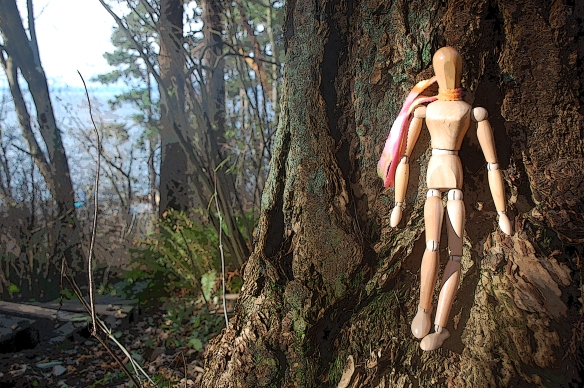 communing with trees
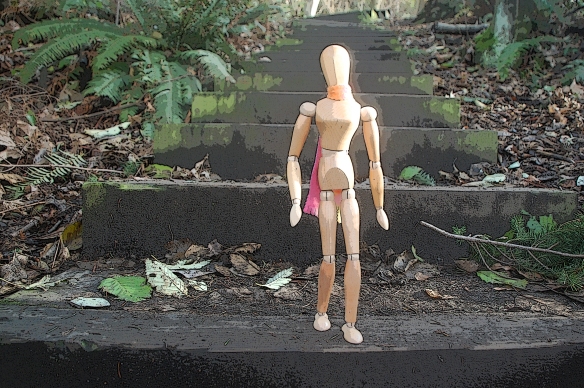
composting autumn on the 138th step

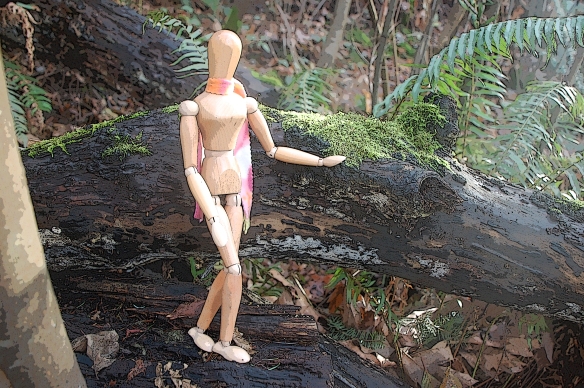 awed by so many layers of life in these woods
 a posterized view over Puget Sound
simply random snapshots of New Years Day in the woods of Lincoln Park…
communing with trees
composting autumn on the 138th step
awed by so many layers of life in these woods
a posterized view over Puget Sound
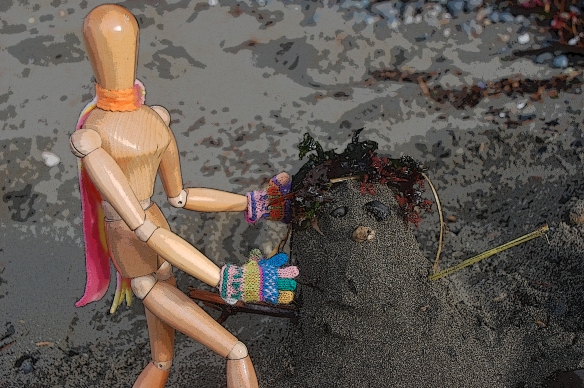 If it doesn’t snow at the beach, can you still meet a snowman?
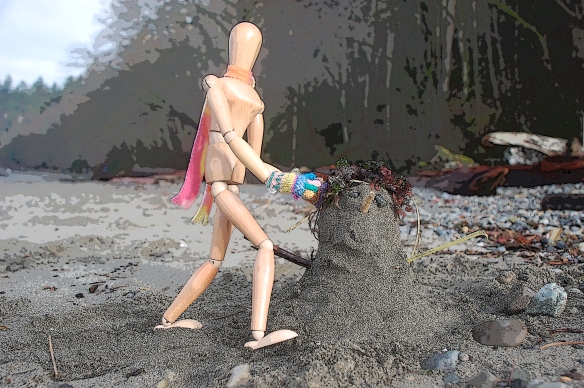 If you find the right ingredients, like low tide, a crab leg for a nose,
seaweed hair, driftwood and sea-grass arm,s and pebble eyes…
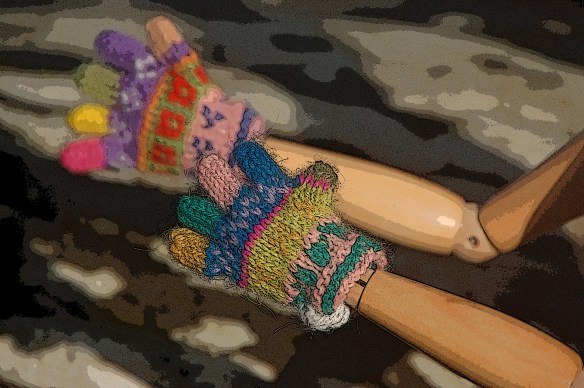 And magic mittens that make sand into snow, sort of…
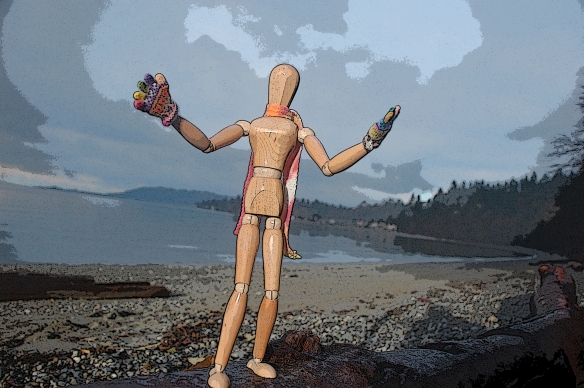
And the final magic?
Sunday sunshine .
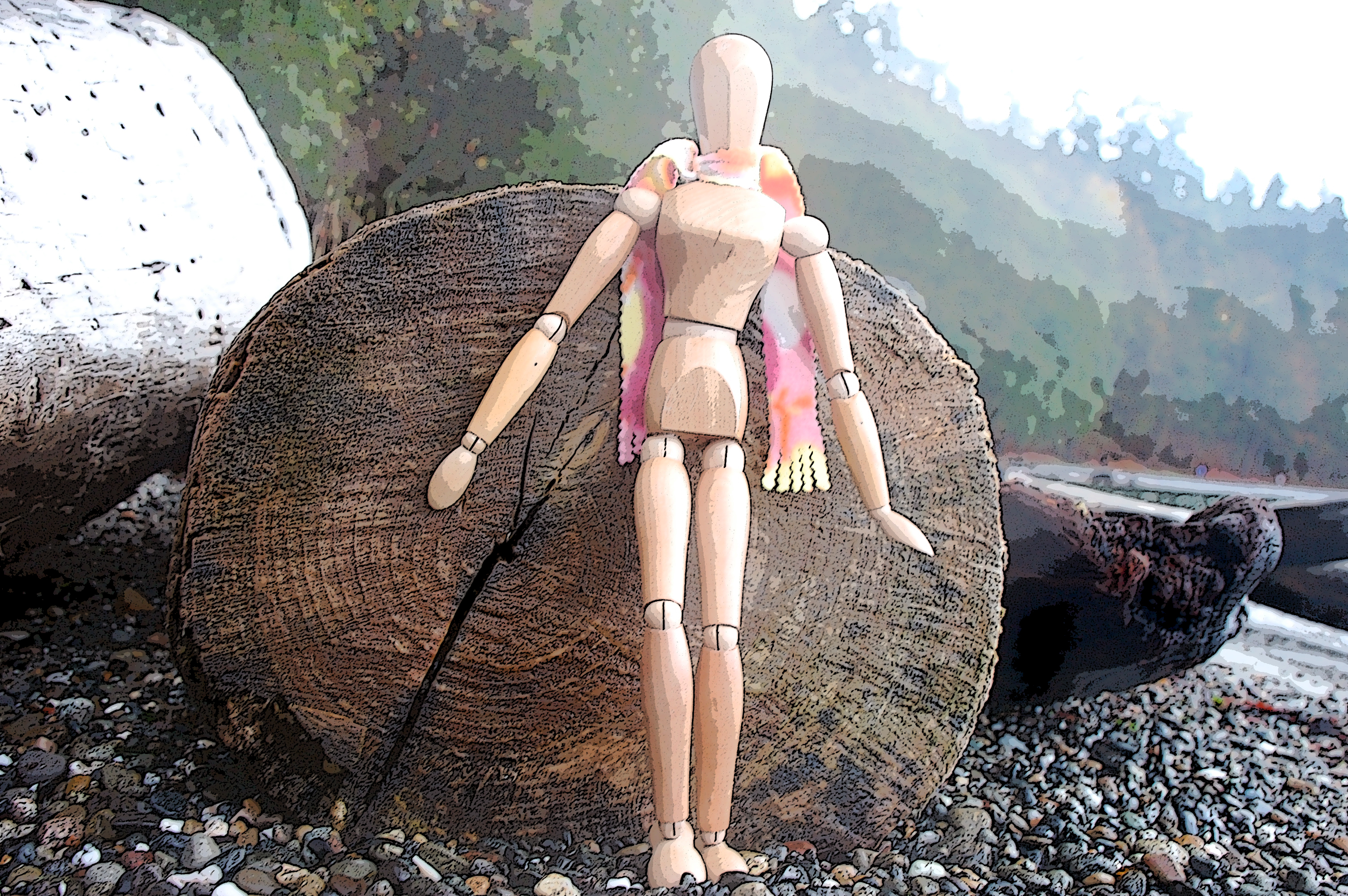 Cracked to the core | Find inner strength
 Embrace the winds of change
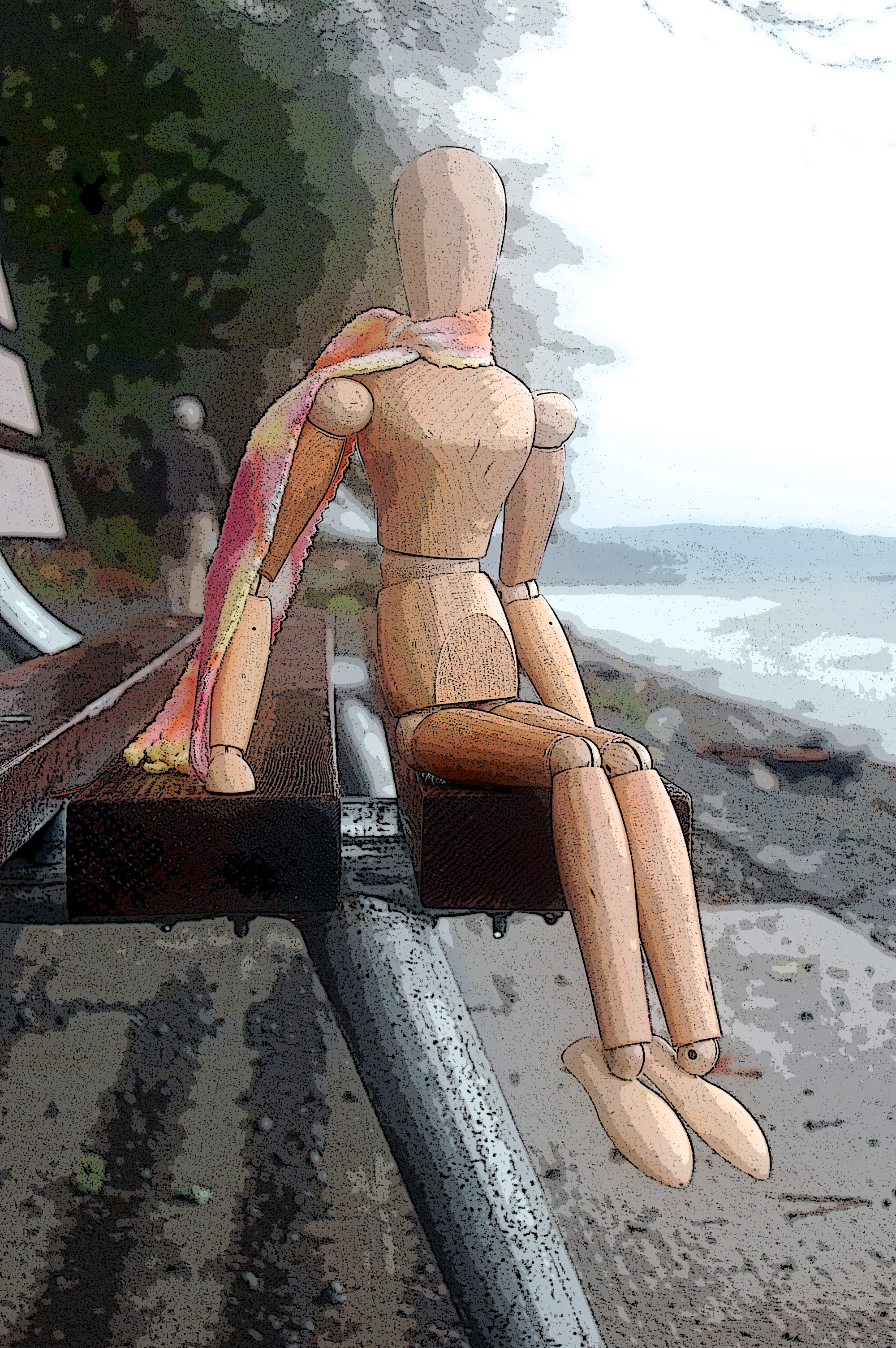 Portrait of Perspective

She saw this seashell by the seashore on a Saturday at 7 a.m.,
well, maybe a bit later than seven.
She and the shell shared stories and some songs, soaking in sunshine.
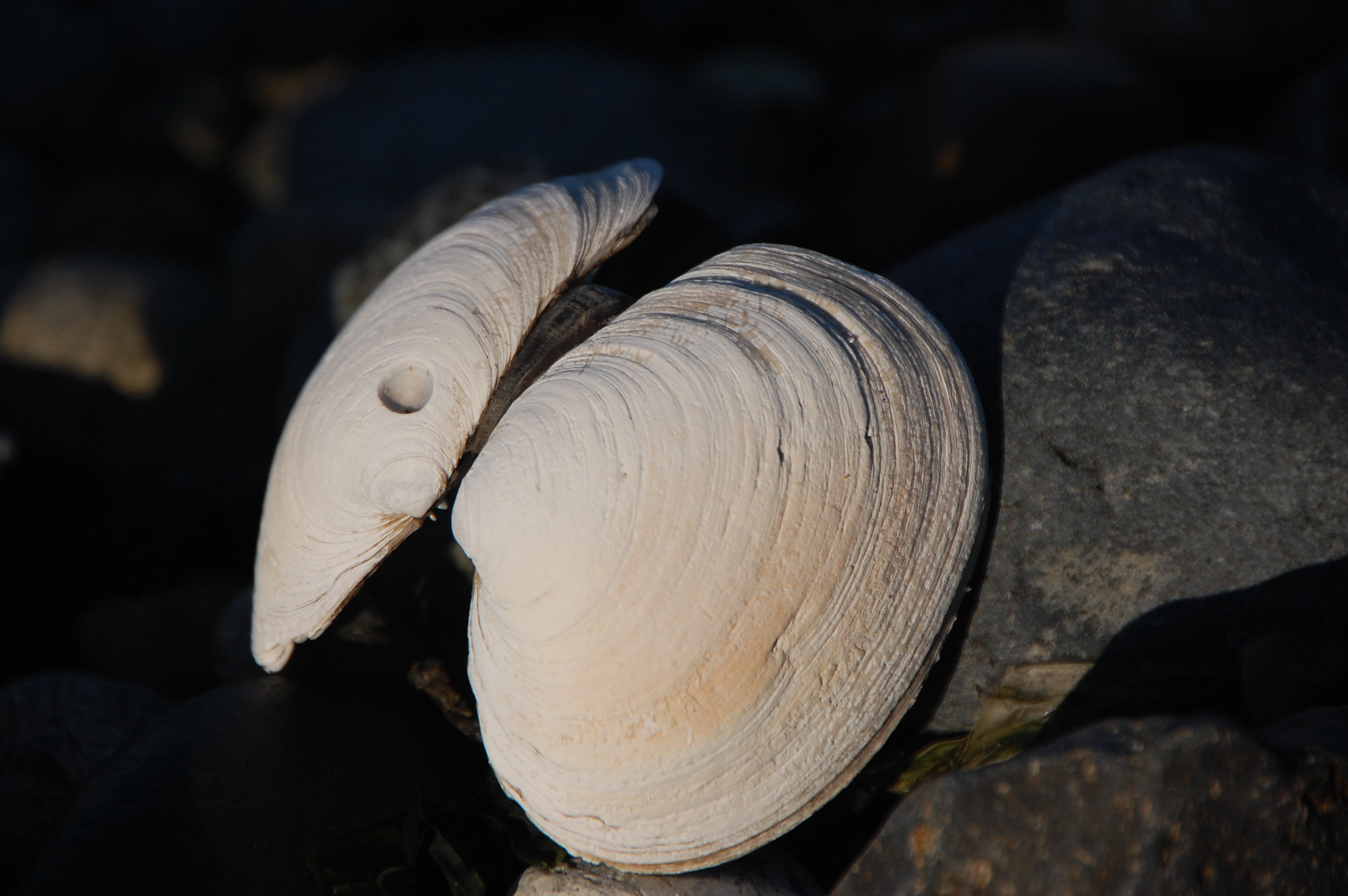
As she spoke softly to the shell, it seemed to say it was a shell-moth
sitting among the seaweed til Puget Sound swept it into the sea again.

Surely, she said, the sea will sweep you up soon.
She stood and stepped over stones to the shore,
where she tried to catch a wave for the shell-moth.

She stood still, sang a strong song, and summoned the surf.
So long, seashell…
Sayonara, it said.
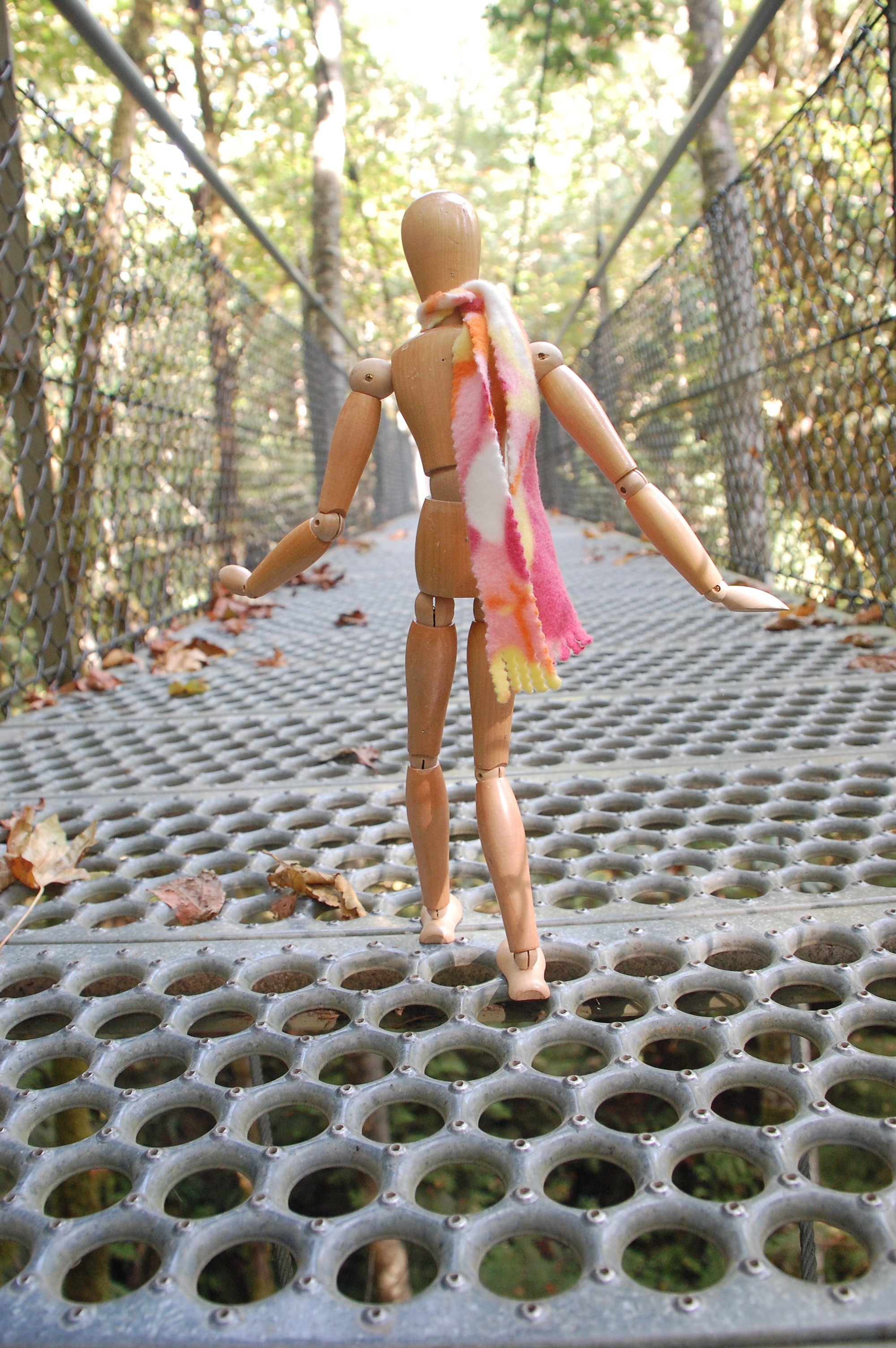
Step one. Step onto the bridge. Don’t look down.
 Step two. Move toward the light. Don’t look down.
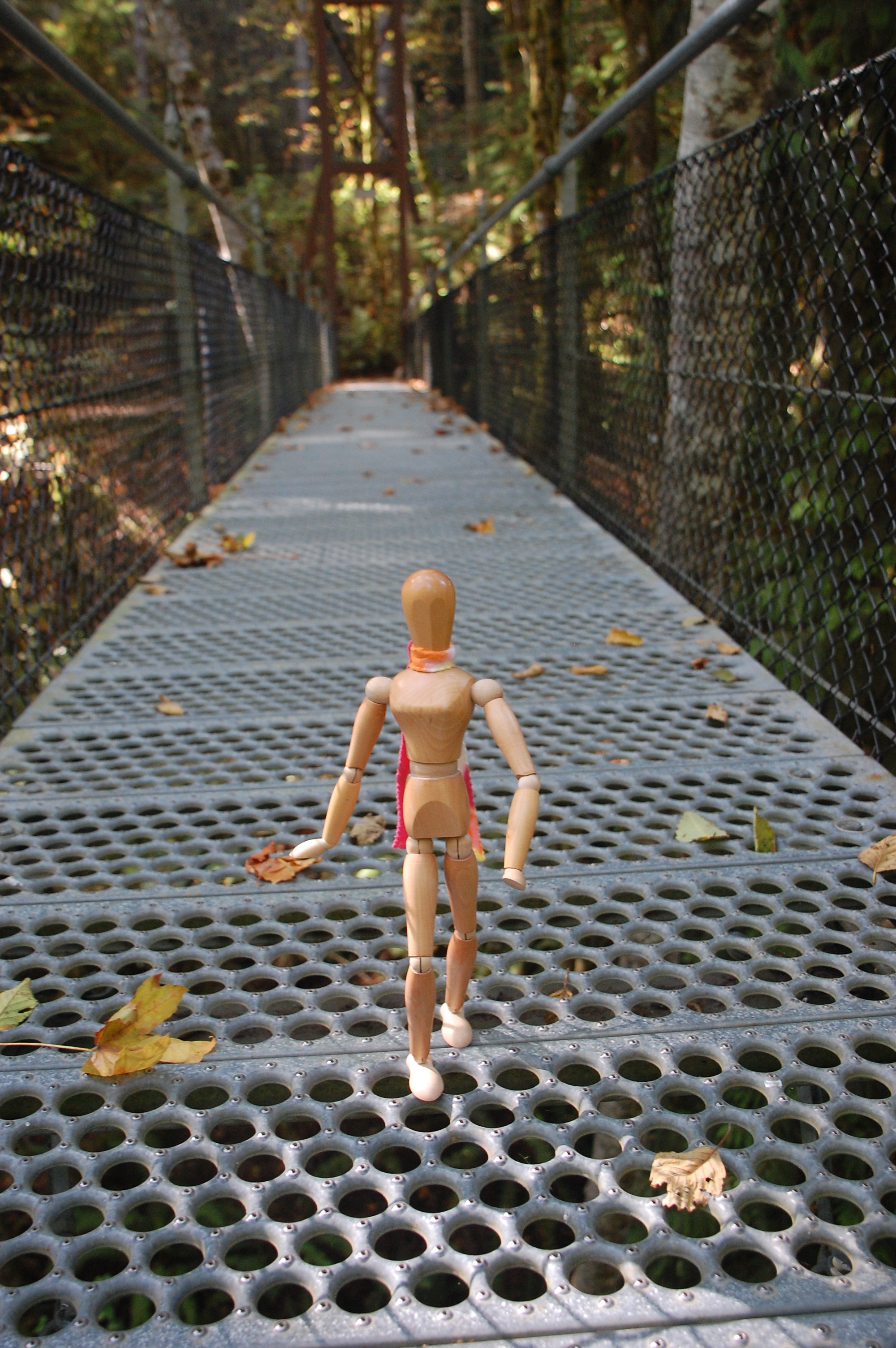 Step three. Half way. Look up.
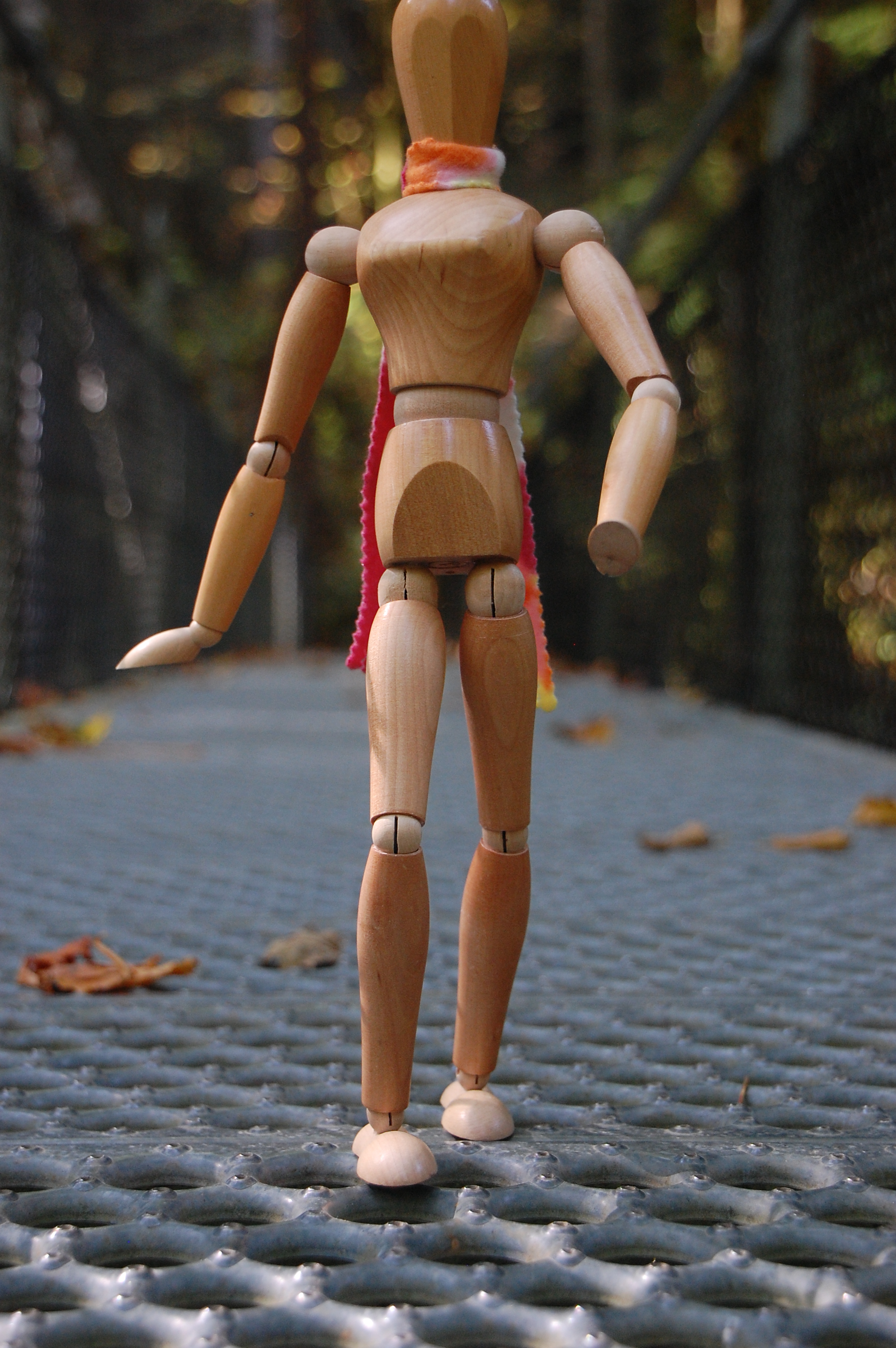 Step four. Dancing now. Step ball change.
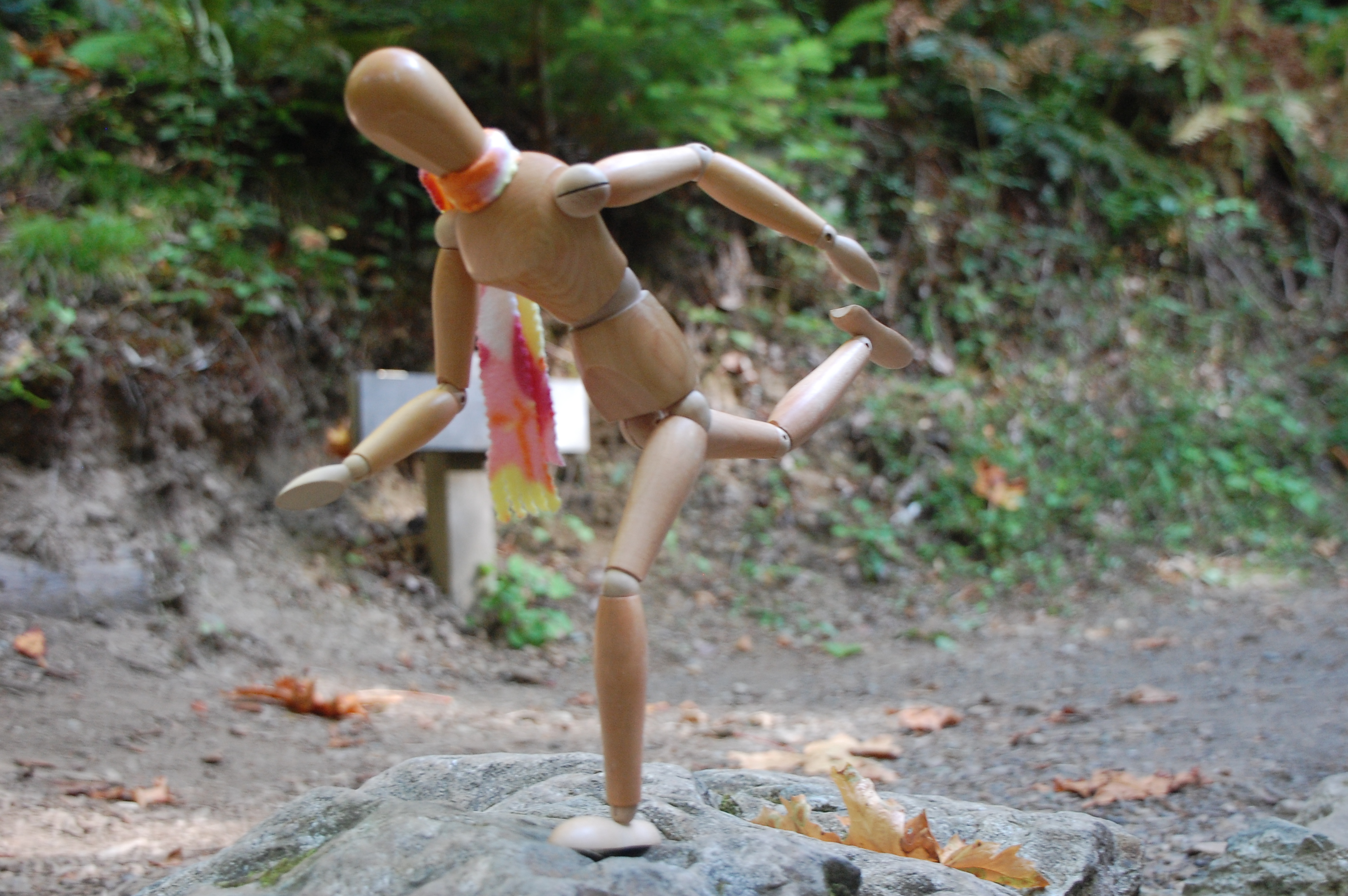
The signpost isn’t the only one who can stand on one leg.
 Left leg leap (a wise woman once said “left is the spiritual side”).
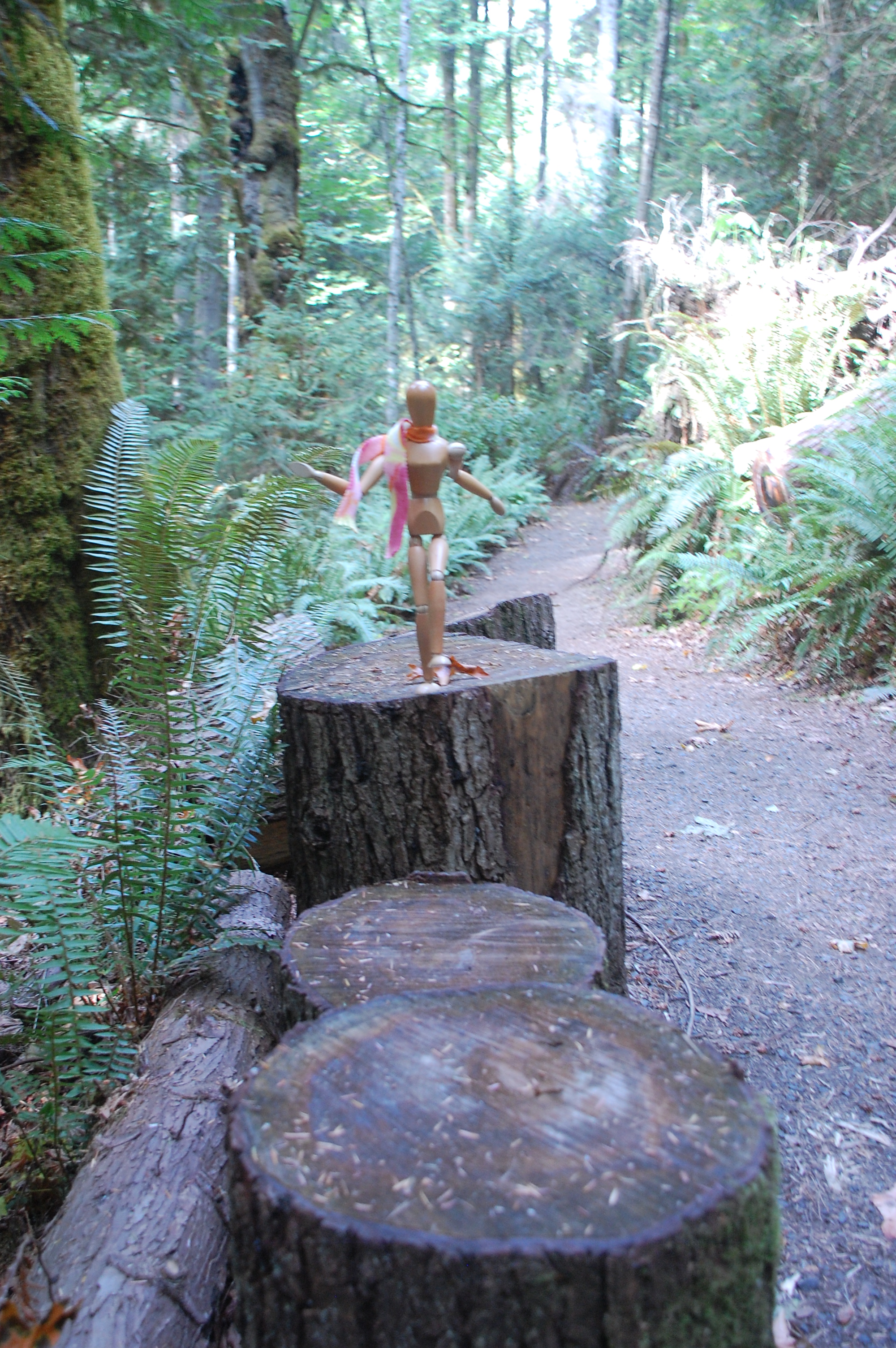 Stump jumping.
 Light drips from my feet.
 Magical forest… light really is dripping from my feet.

Ta da! I sprout leaf wings.
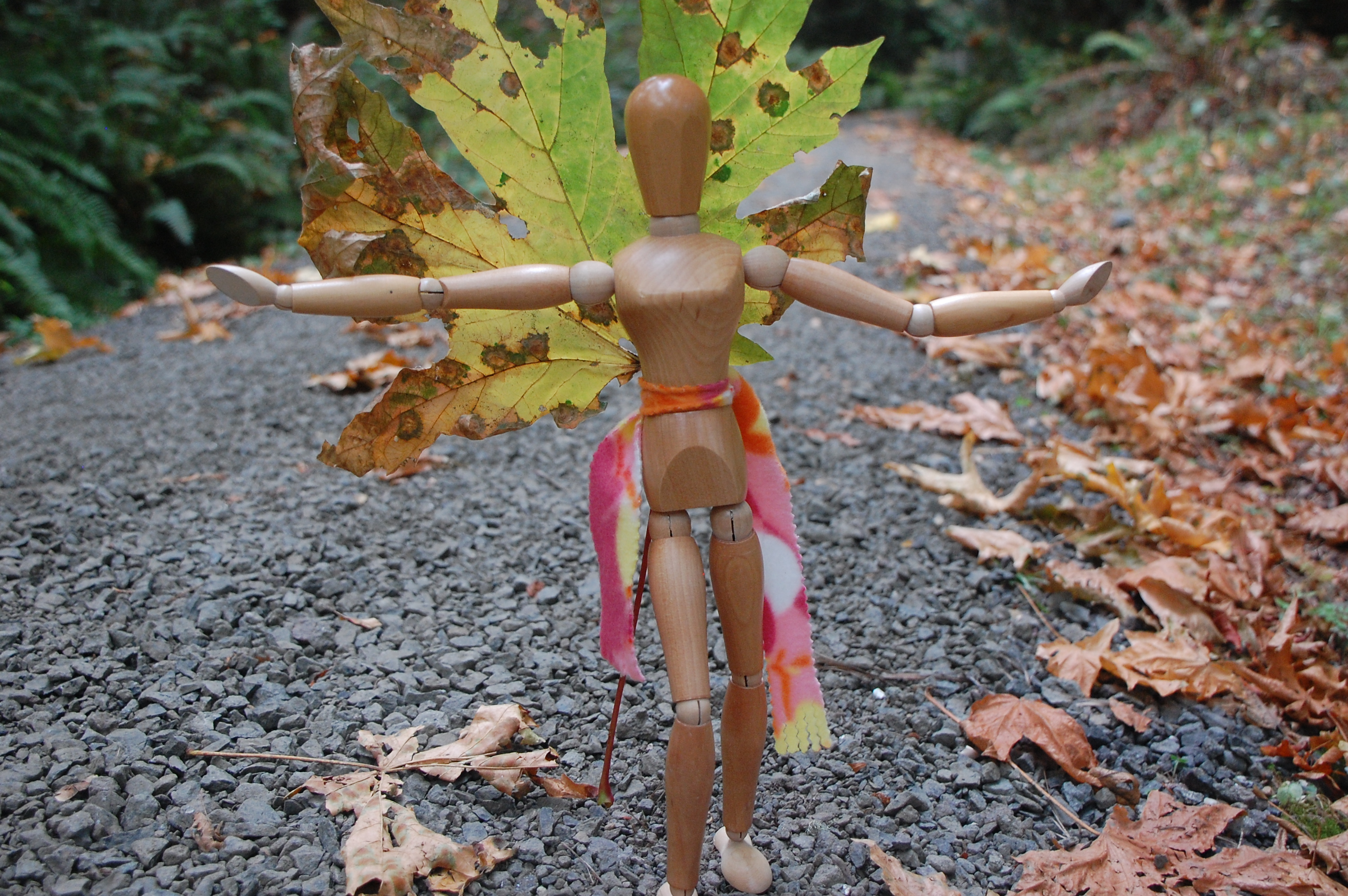 I am a leaf peacock.
 Summer ends.
Thank you, Autumn.
 This blog brought to you by the lure of the Sahale bridge at Islandwood.
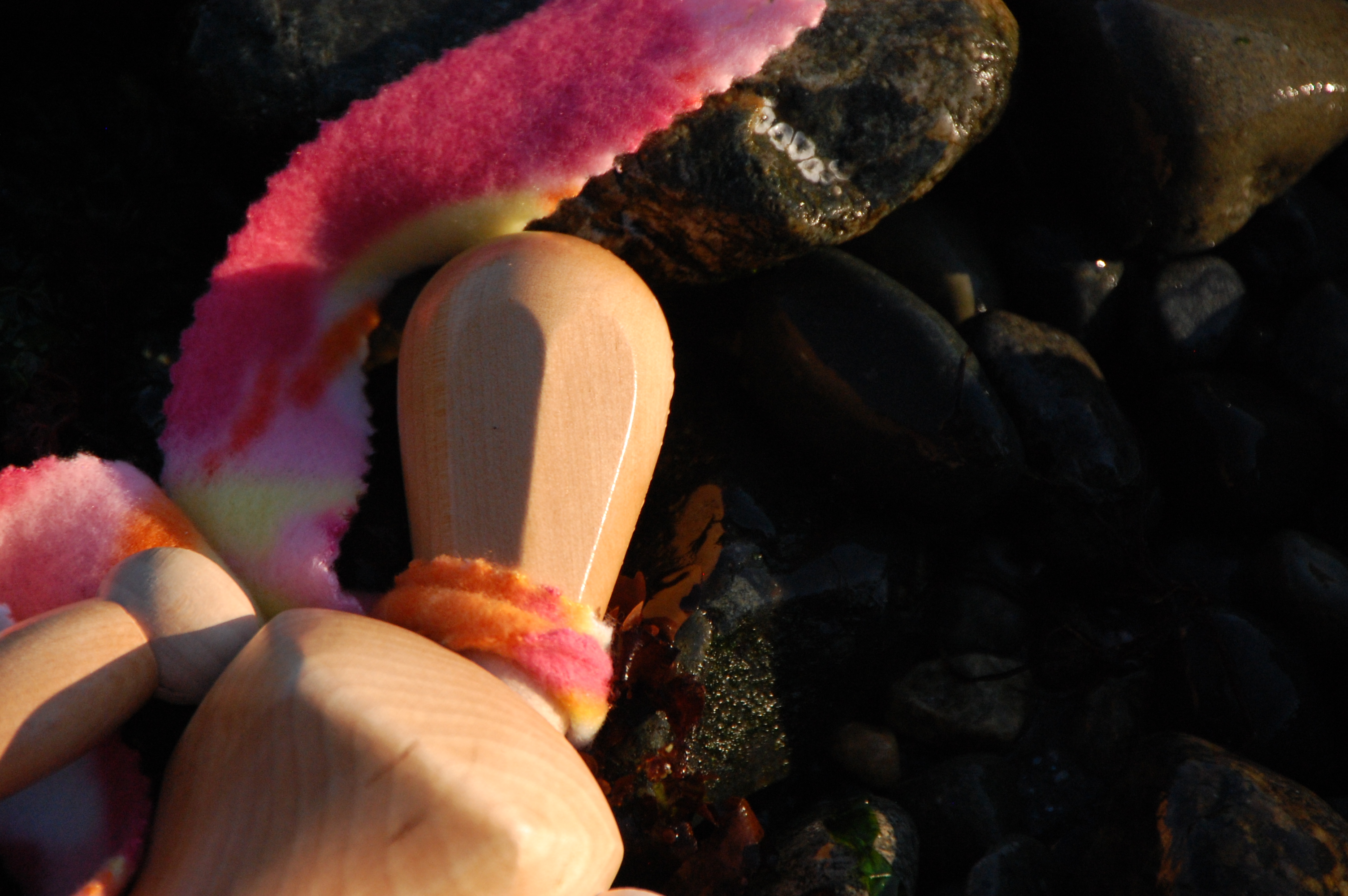
Just before she fell, she remembered seeing her feet…
 and the salty moss…
 and hearing the crunch of the tiny barnacles…
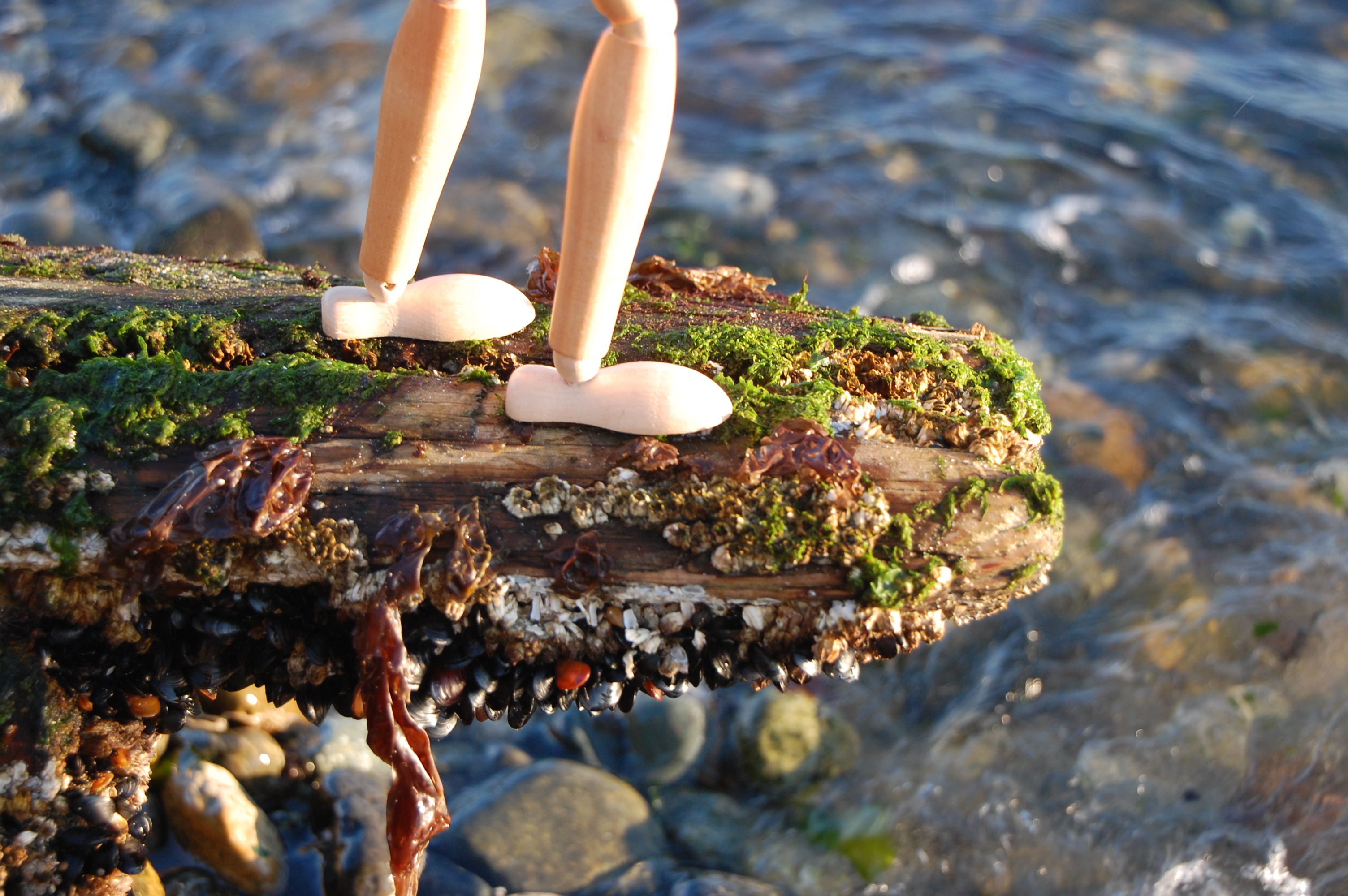 and the waves lapping below paused a second longer than they should have…
 and the sun glinted, changing angles just so…
 and she thought she heard the ferry horn rumble…
 she looked up
the sun in her eyes
and she
sneezed
and she
fell.
so
much
for
balance…
Does Emotikin’s wife have an ever better view of that damn sword?


Read Damocles’ Wife to see how one family learned how to get out
from under that sword and finally embrace life with all of its changes.

Damocles’ Wife: The Inside Story of Cancer Caregiving & Long-Term Survival in the Midst of Motherhood, Marriage & Making Life Matter
by Shelly L. Francis
If you’ve ever wondered how you might find the courage, hope, and faith to face the challenges of cancer and caregiving, you’re not alone. Damocles’ Wife reveals the inner journey of a cancer caregiver, a young wife and mother whose husband becomes a long-term survivor of brain cancer.
Follow their story, inside and out, through nine months of treatment: brain surgery, radiation, tumor doubles, second opinions, second surgery–this time awake–with photodynamic therapy, chemo, chemo, chemo, then high-dose chemotherapy with stem-cell rescue. Recovery…
Given a prognosis of two to five years, maybe ten, for his astrocytoma, Scott invoked his inner samurai to face aggressive traditional treatment, combined with integrative medicine like Healing Touch. Meanwhile, Shelly called on her inner resources, plus the rest of Scott’s caregiving crew, so that she could take care of him, herself, and their preschooler son, Wil, and still be standing no matter what.
This is the whole family’s story of learning to cope not only with the practical aspects of cancer and caregiving but, most essentially, how to really survive—in your soul. Join their journey as they learn to take down the Sword of Damocles hanging over Scott’s head and finally embrace life with all of its changes.
The first caregiver memoir to address long-term cancer survival, Damocles’ Wife will resonate with families facing cancer of all kinds, families dealing with chronic illness, disability, and dementia, as well as families of returning soldiers now facing life with traumatic brain injury.
 In Damocles’ Stories, the foreword written by Clarissa Pinkola Estés, PhD (author of Women Who Run with the Wolves), readers will gain insight into the cultural legend of the Sword of Damocles (pronounced DAM-uh-kleez) from Greek history and her own “peasant” family’s stories passed down through generations. The anecdote originates from the 4th century court of Dionysius II, as told by Cicero. A courtier, Damocles, so admired and pandered to the king that Dionysius invited Damocles to sit on his throne at a feast. But he arranged for a sharp sword to hang over Damocles’ head by the single hair of a horse’s tail, proving to Damocles the sense of constant fear under which “the great man lives.” (Illustration from the Damocles entry in Wikipedia, Richard Westall’s Sword of Damocles, 1812.)
In 1981, researchers named Gerald P. Koocher, PhD, and John D. O’Malley, MD, authored a book called TheDamocles’ Syndrome in which they described the long-term, persistent fear that survivors of childhood cancer feel, ever wondering when their cancer might return and kill them.
In Damocles’ Wife, Shelly Francis offers her own viewpoint of how cancer caregivers are perhaps even more aware of that Sword of Damocles’ hanging over the head of their loved one and what the threat of cancer recurrence means for their own unknown future. Here is an excerpt from Damocles’ Wife:
“Only Scott and I knew, as we feasted, that a sharp samurai sword hung in the air over our table, over Scott’s head, his Sword of Damocles. From where I sat, I could see it quite plainly. Is that the caregiver’s curse—to notice that sword on a thread more often, more clearly, than the patient himself? It was time to step out from under that sword.”


Our imaginations were so lucky to grow up here…


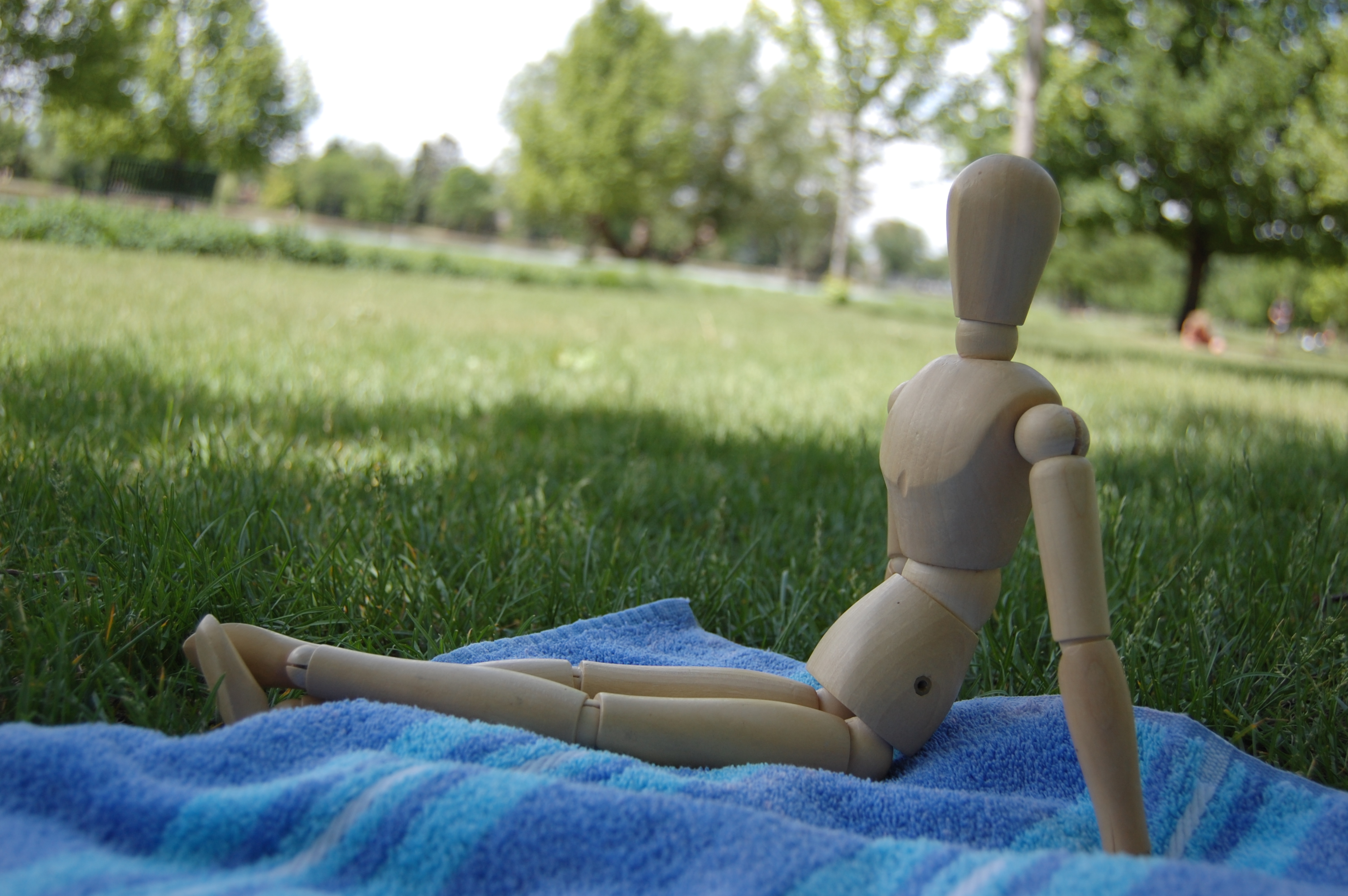


A moment after skinny dipping

Lazy afternoon down by the river

River Prayer Stance

Here is my handle, here is spout...
 Emotikin World